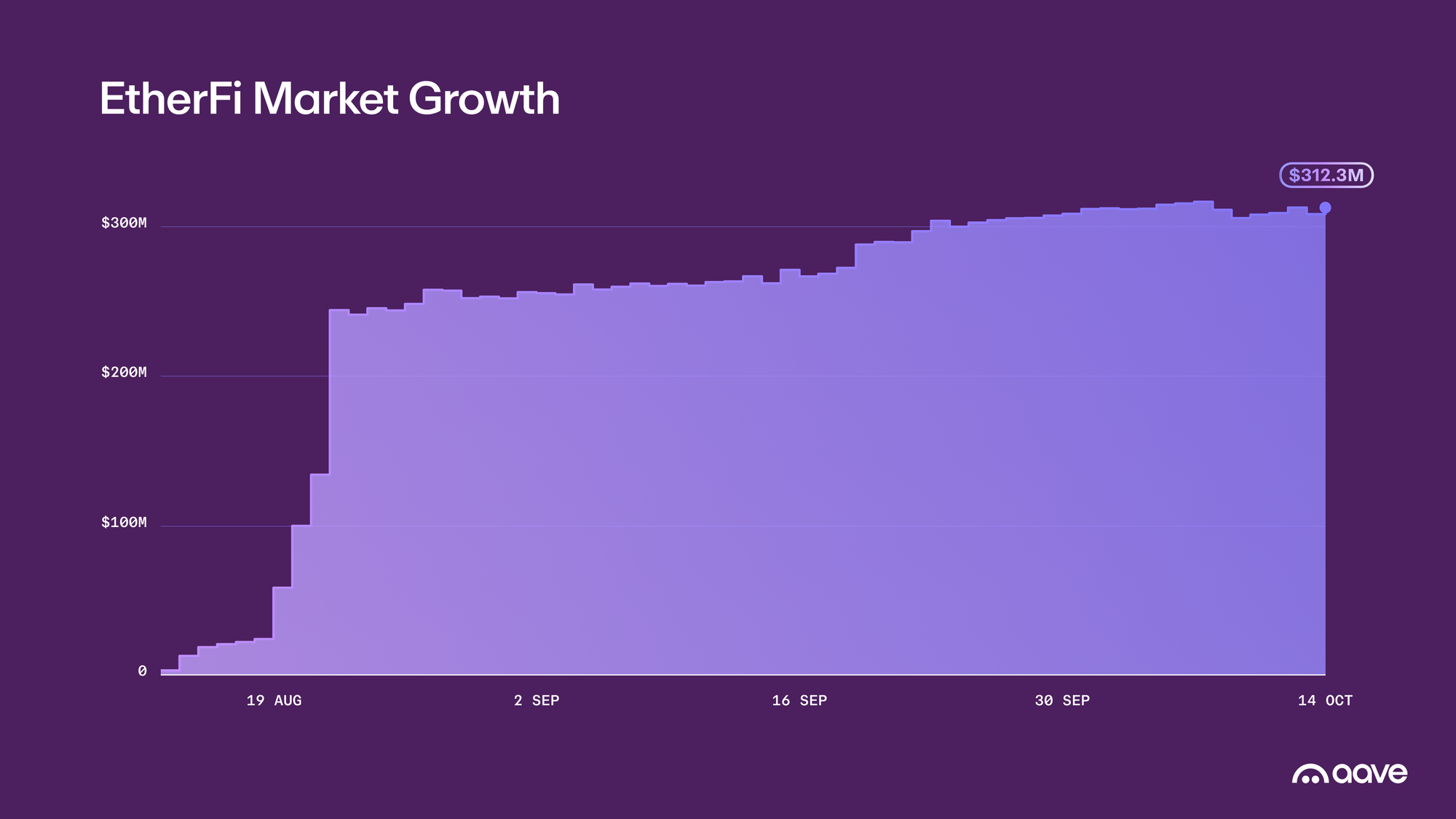
EtherFi Cash, a Visa card used by tens of thousands of users, runs its backend on a dedicated Aave V4 instance on OP Mainnet. Cardholders spend against assets they hold, including ETH, BTC, ETHFI, tokenized gold, and tokenized stocks. At the point of sale, the card borrows a stablecoin against those assets to settle the purchase, and the cardholder keeps the asset. In its first two months, the instance grew to more than $310 million deposits and $36 million active loans, which have since passed $46 million.
What is EtherFi Cash?
EtherFi Cash is a Visa card that lets cardholders spend against their own holdings. A cardholder deposits assets, taps the card, and Cash borrows a stablecoin, usually USDC, against the deposit to pay the merchant. The merchant receives dollars, and the cardholder's position stays intact.
Every purchase on the card becomes a small loan, so Cash runs a steady flow of frequent, low-value loans across a broad collateral set. EtherFi Cash supports a variety of collateral assets spanning ETH, BTC, stablecoins, tokenized gold, tokenized stocks, and EtherFi's Liquid vault receipts. Before moving to Aave V4, EtherFi ran these loans on the Debt Manager, a lending engine it built and maintained in-house.
What is Aave V4?
Aave V4 is the latest version of the Aave Protocol, built on a modular Hub and Spoke architecture. Liquidity Hubs hold deposits, and Spokes connect markets to that liquidity, with each market setting its own collateral and risk rules. New markets can launch on existing liquidity without changing how other markets work.
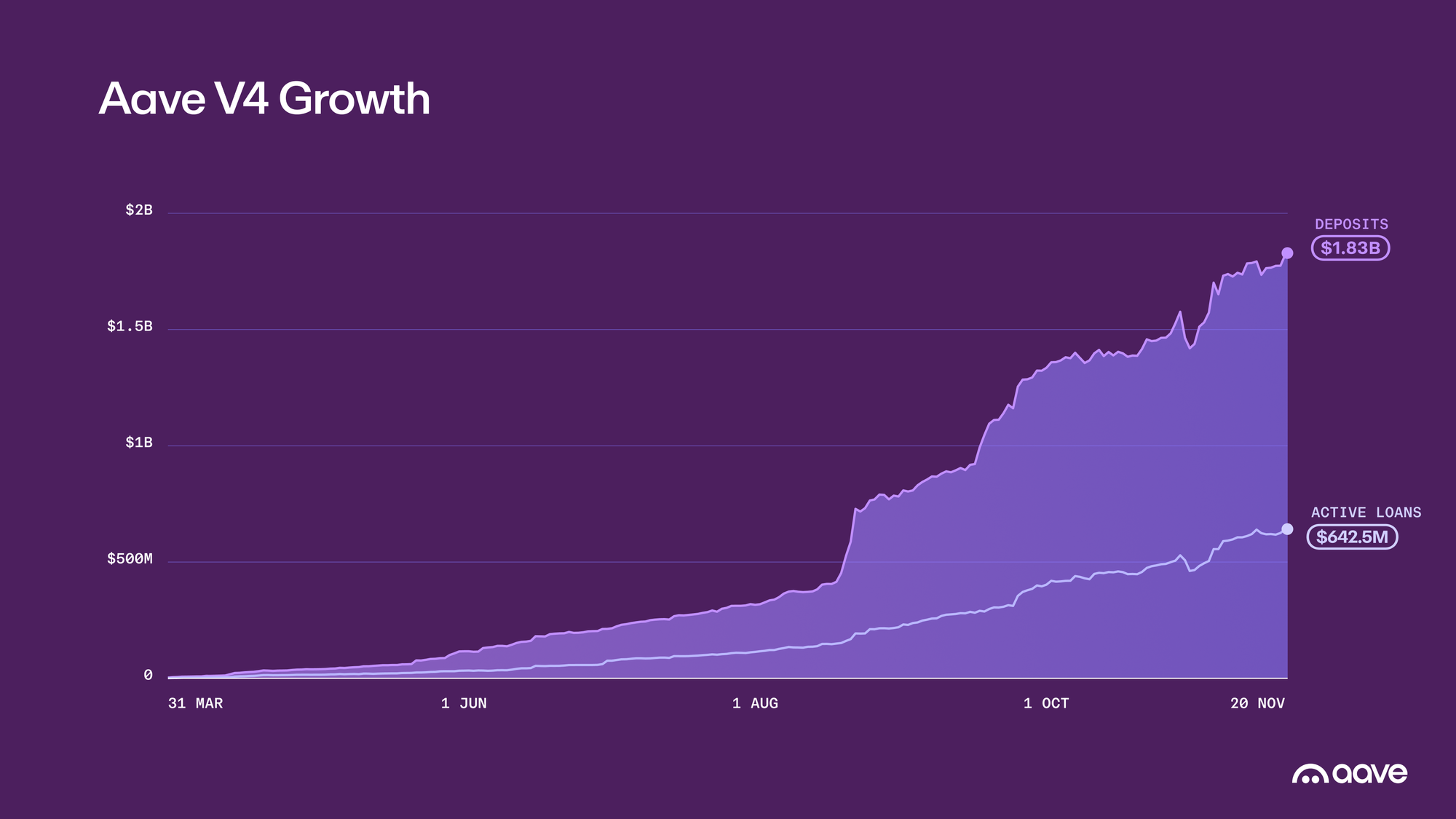
Aave V4 went live at the end of March 2026. By early August it held more than $370 million deposits and $125 million active loans. It crossed $1 billion deposits at the end of September, and at time of writing it holds about $1.83 billion deposits and $642 million active loans.
EtherFi's instance launched in mid-August as a dedicated deployment for EtherFi Cash. It runs one Liquidity Hub and one Spoke on OP Mainnet, with borrowing limited to Cash users and supply open to outside depositors. EtherFi operates the instance end to end, and Nonce Capital serves as independent risk admin, approving every risk-relevant change.
Why did EtherFi choose Aave V4?
A lending engine has many parts that all have to work at once. It needs interest rate models, price oracles, collateral rules, liquidations, and accounting that stays correct through every market move, and each of those parts needs audits, monitoring, and updates as markets change. A company that runs its own engine carries every one of those jobs for as long as the product exists. In its governance proposal, EtherFi described its custom engine as "increasingly operationally taxing."
Aave V4 gives EtherFi a lending stack that is independently audited, formally verified, and has the granular control needed to run a reliable lending market. EtherFi chooses which assets cardholders can spend against, sets collateral and risk parameters with its risk admin, and keeps that risk inside a dedicated Liquidity Hub. The Cash experience above the stack, including User Safes, Credit and Debit modes, and settlement, carried over unchanged, and cardholders saw no difference when the backend moved.
What can cardholders do?
A cardholder holding 1 eBTC taps the card for a $3,000 purchase. Cash borrows $3,000 USDC against the eBTC on their Aave V4 instance, the merchant gets paid, and the cardholder keeps the full bitcoin position. They spend without selling any bitcoin and repay the borrow on their own schedule while the position stays healthy.
The collateral set covers more than crypto. Cardholders can spend against tokenized gold through PAXG or a tokenized S&P 500 position through SPYx, and EtherFi can expand the assets it supports to the list as the integration grows.
Build on Aave
EtherFi moved their backend for EtherFi Cash onto Aave V4, and Aave Kit gives any team access to the same lending infrastructure. With a few lines of code, developers can add earning, borrowing, and more to their apps and connect to liquidity across Aave.
Figures in this article are as of 20 November 2026, the date of publication, unless otherwise noted, and may have changed since.